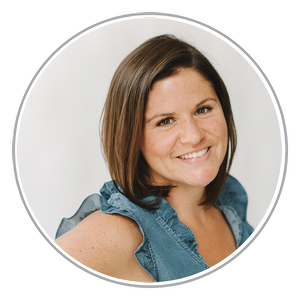
Holiday Food, Feelings, and Finding Balance: A Conversation with Erin Stimac

Holiday food isn’t just about what’s on the plate — it’s about emotions, memories, and meaning.
In this episode, Elizabeth sits down with Erin Stimac, Functional Nutrition and Metabolism Specialist and owner of Erin Stimac Nutrition, to talk about food, emotions, and how to stay balanced during the busiest (and most tempting) time of year.
Together they explore why it’s so hard to make healthy choices when celebrations roll around, what emotional eating really means, and how to ditch the “all or nothing” mindset for one rooted in grace, intention, and nourishment. Erin shares practical tips for holiday events — from handling food pushers and emotional triggers to choosing what truly serves your body — without restriction or guilt.
If you’re tired of feeling out of control or starting over every January, this conversation will help you redefine what it means to be well during the holidays and beyond.
Mentioned in this episode:
Emotional eating and why it’s not always “bad”
How to set boundaries around food without losing joy
Food pushers, family pressure, and saying “no” kindly
Why self-awareness — not perfection — leads to real change
How to reconnect with your body during the holidays
Connect with Erin:
Website: erinstimac.com
Instagram: @erinmstimac
Please note that transcripts may contain minor errors or inaccuracies. We hope you enjoy reading them and find them helpful.
Hey, you're gonna be okay. I'm Elizabeth May, and my functional health practice helps people heal when they've exhausted traditional options. When no one else can figure your health challenges out. My team helps you resolve symptoms and restores your health. You're listening to my podcast or will hear stories of healing chronic illness from a root cause approach. Welcome back. This week we're talking with Erin Steinmack of Erin Steinmack Nutrition. Erin is both a functional nutrition and metabolism specialist and an NTP. She educates on healthy lifestyles, she does fitness coaching, and her passion is really helping people to navigate the overwhelming world of nutrition and education, but implementing all that stuff so that the habits portion of a balanced lifestyle can come to fruition. She really focuses on habits, metabolism, weight loss, and hormone support. A lot of midlife folks, I think that you see and a lot of good work that I get to see you do from behind the scenes. So welcome and thanks for being with us, Erin. Thank you. I'm super excited to chat today. Yeah, I feel like I get the privilege of being your friend and hearing and learning lots of all your little tidbits and your little wisdoms. Like every time we talk, you like drip out a random little something that I feel like could be quotable about habits. So I'm excited for other people to get to hear a lot of the erronisms that make um healthy food and lifestyle change, I think, tangible and like implementable. We're gonna talk about emotions and holiday eating today. So I am really excited to see what you have to hear to say about that because we're not usually, at least in our relationship, talking about those things.
So yeah, absolutely. And likewise, I learned a lot from from you as well.
So excited to dig into it. Thanks, friend. So, like I said, we're talking about emotions, and I asked you to come and talk about holiday eating. But I also know that your habits knowledge and change implementation is super strong because you think about like why are people doing things? What are the motivations behind food choices? And um yeah, like what what's going on on the inside that creates either the choice good or bad on the outside? So, why do you think people are making food choices around the holidays that are really hard? Or maybe even like why do people succeed implementing good choices around the holidays?
So I will say, first things first, when we are trying to make changes, it can be super tough. And the holidays, in and of themselves, like they're a great time to celebrate. You get to spend extra time with friends and family and things like that. But the holidays can absolutely be a perfect storm. We've got like schedule changes, we're out of our normal routine. So when we're trying to make changes, we try to get into this routine of like healthy eating and maybe exercise. And then the holidays come and it gets thrown off. And it's really like the last quarter of the year. So I think that can make things especially tricky for people, especially the people that are like starting to make changes around this time. Um, and the and the emotional load of the family dynamics, we know that that can be very complicated. It can be good, it can be bad. The social situations, same thing there. We use food and drink and things like that as celebration. Um, and that's not a problem, but we just need to know like how to manage that. Um, and I think that's why it gets extra tricky around this time of year.
Yeah, there really is like a lot of emotional stuff going on, whether that's family or life, or even just like the emotional burden of doing all of the things and just making the choices. Like we talk a lot about just like the the choice burden of figuring out food and figuring out things, but like figuring out presents and like what and things you're gonna go to and what you're gonna wear to this thing and if it's gonna fit when you get there to doing it. And then forget all the like peopling parts that like once you're there, what sort of social dynamics are there too? So, probably like a lot of emotional triggers, but definitely I guess I never thought about being a really hard time to implement habit because I always come from like the illness space, like when someone gets sick, it's time to implement the habits. There's not choice in that, but I'm sure setting yourself up to do healthy choice around the holidays is a harder thing. So um, you mentioned kind of some like emotional eating stuff. What really is that and how do people struggle with that maybe around the holidays more? Like what I think we're familiar. I think of Oprah honestly when I think of emotional eating because she used to talk about it so much. But what really is emotional eating? Is it just like I feel this and then I make this choice, or is there more to it?
Yeah, so at its core, emotional eating is using food as a way to cope with our emotions. And I just want to come right out and say it is a lot of times people think like, I'm an emotional eater, and they look at that as a really terrible thing. And I will say most of us, if we really do some deep, deep digging, can really connect with that in some way. And most of us do either emotionally eat, or some of us it can be the opposite, we emotionally will not eat when we're in challenging situations. So it's not necessarily a bad thing, but it's only a problem if it's really our only way that we cope. So, with a lot of my clients, we work on there's coping mechanisms for everything. Some are healthy, some are not. So we work on trying to find a balance between maybe some of those unhealthy or less healthy coping mechanisms versus healthier coping mechanisms that are going to get us to where we wanna be. So, like exercise can be one of those. And it's exercise can be a great coping mechanism, but we also know there's people that take that too far, right? So it's not that any of this, um, any of these coping mechanisms are necessarily bad or good, just like certain foods aren't necessarily bad or good, but everything kind of lives on a spectrum of where we're at. So that's really what it is at its core. Um and again, going back to what we originally talked about, the holidays like can be a very emotional time. And for some people, that's happy emotions. For some people, it's really sad emotions. Maybe they've been dealing with loss or grief or they're struggling in in some other way of in their life. And so figuring out, like, you know, realizing that that can be the perfect storm for people and figuring out a balance can can be really tricky.
Yeah, I hadn't really thought about emotional eating can be not necessarily all bad because we do celebrate with food. Like that's a in the holidays, I feel like are the the most like ritualistic time for there to be emotional eating, even if it's just a good like pattern, like family pattern of that there are other we talk a lot about it in care that like foods are connective, and so when you lose foods due to allergies or illness, you can have an opportunity to create new patterns of connection or new rituals, or you can be really stuck and mad and sad and all the other feelings that your emotional, you know, trigger food connective thing was there. But I like what you said about their other tools, just like the exercise piece. We talk a lot about increasing capacity for those emotionally triggered, which from my side it's different. Like you're losing your food because it's unsafe for your body at this time. Um, but developing other tools that can kind of help us deal with that emotional trigger, if you will, or emotional pattern that's food related.
Yeah, and there are so many traditions around the holidays that revolve around food. And I think it's healthy to think about that in a way that's not a bad thing. Like if it's Thanksgiving and you love your mom's pumpkin pie and you get that once a year, you should by all means, if if there's not an allergy or something like that, that's gonna really detract from your health in the long term, like you should be able to have that food that you choose to have, enjoy it mindfully, and then get back on track with the next meal. It's not necessarily a bad thing. And and one of the things I work on with my clients is finding that, I think that word balance is overused, but finding that happy medium between enjoying food, enjoying the foods that are maybe more calorically dense, I don't even want to say unhealthy, versus the ones that are a little bit more balanced and gonna get us a little closer to where we want to be. And let's just say we're talking about weight loss in this instance, but also food is not, you know, a healthy lifestyle is not just about the calories that you're consuming, but also your mindset around food. And I think when it comes to dieting, it's very easy to forget that because we always think, okay, I need to exercise more, I need to eat less or eat healthier. When we're not thinking about like becoming obsessive about food is not a healthy place to be either, no matter what your body composition is. And so it's not always about weighing less on the scale or being in a smaller body or having more muscle mass. It's about having the balance to where like you eat food that helps you feel good and helps you perform, and you look in the mirror and you're content with that person, and you can have that pumpkin pie and be like, that was delicious and worth every bit. And then I'm just gonna get back right back on track with what I know helps me feel my best. And I think that's something that's definitely like underdiscussed and under like just not understood very well in the dieting world.
You always like how you bring language in. We do the same with our clients who are like, you know, they think of themselves as sick, and in some ways, like, yeah, you're sick right now, but you're not gonna be sick forever. You're not a sick person. But like the language that we tell ourselves around, like, even just you saying this is more calorically dense versus unhealthy, or a food being like having moral value being bad food or good food. All of it's just like this litany of choices that we can make, whether or not we went on a too too far of a walk or a lazy walk or a like it doesn't really matter. Like, that's just a little bit more of a good thing. And like you said, we can also go all the way off the other deep end of like, I'm gonna have my Thanksgiving meal and then I'm gonna do a crazy workout tomorrow that I am unable to do because 100%, yeah, 100% recover and can't recover our brain. How do we know when people have when when our enjoyment has like gone off track? Like, what are signs for us that we've crossed that too much point? Because I think sometimes that's maybe hard to identify.
Yeah, I mean, I think when you so first of all, when we start to make changes, we have to realize like when we're forming new habits, it's gonna require a lot of brain power. And I think that that's misunderstood because people will start. I was talking to a client this morning that I've just started in the last couple of weeks, and she's like, this is really hard. And she was looking at it as like every time she didn't eat meal, her meal in a in a perfect way, it was a failure. And it's a lot of um kind of flipping the script on that and focusing more on like you're collecting data, and this is a learning process. We have to understand that like when we're trying to build new habits, that we are working on sort of undoing some of the processes that we've lived our entire lives and are on autopilot. And anytime we make a change, it's gonna be hard and it's gonna take a lot of brain power. Um, but to to answer your question, I think when when it becomes like all consuming and we feel anytime we feel like we have to earn our food with exercise or we have to exercise off a meal we ate, that is leaning towards the wrong direction. And so finding that healthy balance of like, hey, I'm eating to fuel myself, I'm eating foods that I like that help me feel good, but also I'm exercising in a way to like respect and honor my body and not try to change or shrink it. I think um, and so just as much as it is about making those choices, I think there's a huge emotional component too. And that's why I call what I do healthy lifestyle coaching, because it really is all about the lifestyle and not just, you know, dieting to be in a smaller body, because we know that if you look at the statistics on weight loss, it's pretty depressing. Most people that lose weight gain it back and then and then some. So it's all about building that lifestyle that's gonna get you the results that you want and then enable you to keep those results long term.
I think from this side too, like seeing inside of your coaching as much as I can from here, that is a really big difference between the way that you work with people and maybe the way diet and lifestyle stuff practitioners kind of approach things. Like you are so after the brain all the time, and you are so after the shame part and the empowerment part, and that stuff is so important because our brain is still an organ and it still leads so much of what the rest of our body is able to do. And that change component, habits component is really like making good into routine, as opposed to making a short-term lose weight, reach this one goal is so important because you're right, it doesn't stick at all. And even just identifying self-control, more self-awareness, I think is something I feel like you bring to the equation a lot of like that realizing when we've fallen off the wagon and how to identify that, and then just to identify it as like, okay, we had a little blip back on track. Here's what the track looks like, and it's not that this is bad or good, it's that this is where we're going.
Yeah, we have to be aware of we have to be aware of any of what we want to change before we can actually change it. So a lot of people will be like, well, I'm starting my diet Monday or I'm starting my diet January 1st, and they're not even, they haven't even thought through what's on autopilot for them. And so if we really want to change it and we want sustainable changes long term, we have to be aware of the fact of like, oh, we're grabbing this food when we walk out the door or we're starting our day with a sugary latte and a blueberry muffin from Starbucks every day.
It's really easy to think too to not be present to a lot of stuff because we're all so busy, right? And there's just a lot of things that we do that we don't think about, you know, like you grab a coffee and you have a breakfast, but then by the time you look at what those things all contain and become present to it, and then you realize two hours later you had something else because your blood sugar crashed, then you're like, oh okay, like this all makes a little bit more sense to me as to why I got here, but sometimes it's just like life is moving too fast, and we don't always have the skills or awareness to make a better choice, or no, we need to. So how do you think people can do some practical choosing? Better choices in the holidays when they're at events or when they're going through the motions of holiday stuff without being like really restrictive or obsessive or ruining all the fun for themselves.
Yeah, yeah, absolutely. Well, I think we have to go get back to like what what at the core are we celebrating during the holidays? And so a lot of times we have these social things and it's about being with people, right? And we forget about that and we make it more about the alcohol or more about the food. Um, and one thing I work with clients on is really like focusing on like the reason you're there and you know, just chatting with friends that you don't get to see as often. Um, and so kind of flipping that script and making the food instead of like the centerpiece or the alcohol or what have you, be the centerpiece of the event, make it about why you're actually there and connecting with people, which we're also busy, you know, having good conversations, things like that, and letting the food be kind of take the back seat on it. Um so one way that one thing I see a lot with the holidays is people think like, oh, it's gonna be just a crash course. It's just gonna be a mess of like treats and drinks and all that kind of stuff. And I see a lot of people get in that sort of all or nothing thinking and just very restrictive. So a lot of times people will like to kind of save their calories for the meal. So if they know they're going to a social event in the evening, they'll like undereat during the day or not eat enough. And it is a hundred percent guaranteed to backfire. So never a good idea to do that. Um, and you mentioned like in your last comment, like balancing blood sugar and things like that. And I know we work with very different um types of clients that are struggling with different things, but at the at the root of a healthy lifestyle, the same principles apply, which is what I love. So I still work on blood sugar balancing with my clients. And like that's a lot, we don't necessarily call it that, right? But they learn how to build a plate that's gonna keep them full, it's gonna keep them satisfied, it's gonna have, you know, plenty of lean proteins and healthy fats and whole food fiber sources and carbohydrates and things like that for energy. So um the same, the same rules apply. So I would say going back to your question, um, making better choices, don't bank your calories. Um, you know, eat normal meals throughout the day so that you don't go to these events overly hungry because that's never gonna go well. Um, if you have the opportunity at some of these events to bring healthy food with you, and it doesn't, I'm not talking about bringing your Tupperware of like dried chicken breast and steamed broccoli, but people love, I have not been to one social gathering and taken something that is, you know, what we would consider quote unquote healthy, and people not appreciating it, not asking me for the recipe, not saying this is delicious. People really appreciate real good whole food. I mean, if you think about Thanksgiving, the holiday we just had, think about the food, the basics of what's on a Thanksgiving table, right? It's turkey. That's a great protein source. We've got potatoes, right? We've got green beans, we have all these things. It's just our current culture that is like made everything heavy and full of sugar, full of, you know, fat and things like that. And if you get back to the root of like real food, it's delicious. People enjoy it, it makes them feel good. Um, so I would say, you know, taking food with you. Um and then the last thing, the problem can be when we let it become a whole holiday season of treats and and drinks and all those extra things.
Quick break. If you've been curious about homeopathy, this is your sign to try it. At Hey Hey Homeopathics, we've created liquid remedies for everything from sleep and skin to digestion and beyond. Safe, gentle, and designed for real life. And if you're a practitioner, our preferred professionals line opens the door to powerful tools like no sods, myasms, detoxers, and more. Anyone can shop, but professionals can apply for exclusive access. Visit Heyhe Homeopathics.com and start your path to natural healing today. That's such a good point because if it's like, I think about springtime for at least my family, we have a bunch of birthdays all in a string and we've got Mother's Day and we've got Easter. And for me, in some ways, that's like a holiday season too. Like this year, I think we had like six weeks of a cake every single week, and I was like, we got to lay off, and this is too much. But also, I don't think about that as a holiday season that I get a go pass. I think of it as like there's six events over the next month or so. I'm gonna be mindful about my food during the week so that I can enjoy these six cakes in a row and other things, I'm sure. But I'd not thought about it in that way that, like, yeah, it is just a series of events as opposed to like it's this big long month and a half thing where we can just go bananas. Um 100%. Yeah, yeah. And I also think too, the bringing the food stuff is so huge. We talk about it a lot because when you go to somebody's house and you have a new allergen or you have food you're trying to avoid or whatever, there's so much discomfort for people and asking their hosts, like, what's in this, or can I have this? And yes, we need to ask and we need to engage because you're giving someone the ability to like serve you and take care of you. But also, I take stuff all the time and I don't say a word about it being gluten-free or dairy free or whatever. And right, sometimes I do it as a trick. I will wait all the way till the end and then somebody will be like, So we saw you eat that. Was it gluten-free? It was good, and I'm like, Yeah, it was so it was good. Yeah.
Yeah, it's real food, right? Real food can be gluten-free, it can be dairy free, it can be so I think, yeah, bringing something too that you're comfortable that fits in with the lifestyle you're trying to lead is great. And share that with other people because food is love and it doesn't always have to be a super sugary or you know, fat-filled thing to be able to share it and for it to be delicious.
Yeah, yeah, very true, very true. And I think too, like everyone's relationship with food is different. And that's a cool thing about relationships is that we get to be in relationship with lots of different people who have lots of different food perspectives, some of them different, better or worse, whatever than ours. But like it can be a value too for me to bring something that introduces someone to something healthier, or vice versa. I can be introduced to something that I'm really willing to spend the calories on when I have it. 100%. Yeah. But it's like that graciousness. I think we all probably, well, I think in general, probably in 2025, we all need to like cool it a little bit about things, but we do need to be a little more gracious and like open, like taking something with and letting other people eat what they're gonna eat and knowing that what I'm gonna have on my plate is okay for me, and you can have what you're gonna have, and that's fine. I think a lot of times our own food stuff can like come out onto others and be pushy or be judgy, or and it's just like a whole food's such a dynamic, but it can be an empowering one. So how do we deal with people who are more either pushing things on us? I think about going to parties and like, here's a cocktail, here's a drink, have another drink, have another dessert, try all the desserts, or even going to like your aunt's house who's like, Oh, I didn't I saw you didn't get a little bit of everything. Like, how do we deal with the like food pushy part of holiday season?
Yeah, well, I think a lot of times it it depends on where the comments are coming from. I always Like to work with my clients and like what is on your plate is really nobody else's business, and what is on somebody else's plate is really none of your business. So somewhere along the line, we found it okay to start commenting on people and what they're eating. It's just like somebody's body, like you would not comment on the way somebody necessarily like, oh, you're not looking so good. It looks like you put on some weight. Although I know some family members may do something like that, but it's not really, it's not really PC, right? To comment on things like that. So just a reminder like what's on your plate is your business, and what's on somebody else's plate is their business. And we don't have to comment on that, and they don't have to comment on ours. Um, but in general, when people make comments, a lot of times or try to push food, let's say, a lot of times it comes from a place of love. We might not understand that, but it may be tradition, it may be something that they worked really hard on in the kitchen, and they want you, it's a way of them showing love to you. They want you to partake in that. They're not living your body, they're not in your lifestyle, they don't know what your goals are. And it's not your job. You don't owe them an explanation, and it's not your job to tell them necessarily. Um, so I think you can still appreciate the intention, but I think you need to honor yourself. And I think we're so used to just like backing down for what from what's best for us um for somebody else. And so I like to um have my clients work on a few responses that are just sort of automatic and they practice saying these things before they go um so that there's less less stress. So if you're okay with it, I'll share a few of those.
I love a boundary line.
Okay, awesome. And a lot of times people are like, I just don't know what to say. So yeah, I'm gonna give you a couple of ideas and feel free to seal them and and and no problem with that. So the first one would be like a more polite and but direct way to go. And you just say, thank you so much. I'm good right now, right? You don't, a lot of times we feel like we owe so much more, like I'm on this diet, and my coach says I shouldn't eat this, or that's got way too many calories in it. You don't, you don't owe anybody anything. So thank you so much, but I'm good right now. It's nice, it's polite, it's short, right? Uh second one would be more of like a soft boundary, like say your grandma made a pie or something like that. You can say, Oh, grandma, that looks amazing. I promised myself I'd stick to one dessert tonight, but thank you so much for offering. Um, again, short and direct, let's her know that it looks good. Maybe you could offer to take a piece to go or something like that to not hurt her feelings. But again, a soft boundary can can work as well. Um, and the last one, you can just be honest if you want to be honest and just say, you know what, I'm working on some new habits and I'm keeping it simple. Um, so I'm I'm good right now. Right. Again, you don't need to, you know, you don't need to over-explain yourself. And I think just keeping it basic and not overthinking it can be really helpful.
Yeah, the explaining part's hard because you want, I mean, we all want to be understood, but we also like you in an effort to not offend someone, you want them to understand why you're doing something. But I say all the time that no is a complete sentence. And since it's the holiday, I'll go with like, no, thank you. That's yeah, right. But ultimately, it's your body that you have to live in. What you said is very, very true.
Yeah. And a lot of this process is just learning to honor yourself. And I know you work a lot on that with clients that you work with. Like you, we are so used to like pushing back, and especially moms, right? Like, we are so used to putting other people in front of ourselves. Like, use this holiday season as like a learning experience to really try to focus on like you don't owe anybody anything. And we also think people think about us a lot more than they do. So, like they're not, you're not leaving the gathering and they're not, you know, hitting elbows with each other saying, Oh, did you see that she said that she didn't want my piece of dessert? And honestly, if they do, again, it all goes back to them. This is on them. This is this is the issues with their choices that they're making and not you. So you should be able to say no, thank you and feel good about it.
Yeah, yeah. I think that's a big one when people roll into holidays and this is their first time either avoiding foods for their health, whether that be from an allergen perspective or from a just prioritizing health perspective, um, it's it's very uncomfortable to set boundaries. It's uncomfortable in your family dynamic to do a different thing than everyone's used to you doing. But ultimately that like honoring myself, how can I care for myself thing? And I love that you talked about moms, because as moms, the holiday season is long and you have things to do for so many weeks and you don't get to wait. Like Christmas Day comes and my kids are like, oh, I just chill. I still have several more days to go of stuff. Yeah. And like, if we don't think about how am I gonna feel later tonight after this, or how am I gonna feel tomorrow morning when I have to get up and go do the, I don't even know, turkey trout with my family because I ate too many things tonight, or ate things just to be courteous that I know aren't gonna feel good in the body, then like that literally stars no one because you've taken down one person that's a part of the peopleing part of the holidays. And like what you said in the beginning, if we're back to that, the whole point of it is the connectivity, then we're in a better place, I think, to make food decisions.
At least that's what that is, yes, that is such a good point. We didn't really talk about that. But as a mom, like you need to be firing on all cylinders for the holiday. I know you and I have joked back and forth. We've talked about like the elf situations and all of that. It's like the mental load of motherhood is a lot, but like the mental load of motherhood during the holiday season is just like 10 times more. And if there is anything that is gonna keep us from feeling and performing our best from a food perspective or the inability to like, like you said, get up the next morning and do what we need to do, like it needs to be a hard no, you know? And and I think that that's another way to make it easy for ourselves to like, hey, I'm not gonna have that drink or I'm not gonna have that that extra dessert because I know it's gonna impact my sleep. I'm not gonna feel well the next day, things like that. So it makes it easier to say no when you know your body's rejecting it too, you know.
Yeah, yeah. You know, I love, and I'm gonna I'm gonna take us off um course a little bit, but you mentioned like somebody saying, Hey, do you want to have this drink? I would love if you would share just a tiny bit about when you decided to stop using, or I don't want to say using alcohol, drinking at all for your health purposes. And like, how did that because so many people talk about that a lot, like okay, we're doing food stuff, and now I see my kids are getting better, and I identify that I'm still doing this one habit that makes me feel pretty crappy, and it was previously my self-soothing motherly wine habit or whatever it is. But how how did that come about for you? How did it change things for you? And does it still show up for you in the holidays now that you're kind of falling into things?
Yeah, so it's been like two and a half years since I've taken a break from alcohol, and I like to say that because it's like, who knows if I'll ever have it again? But I will tell you, zero desire, right? Um, but at first it is hard. Um, and that's something we can we can dig into a little bit more. But in general, the the reason that I personally stopped is like health is very important to me. And I was not never a big drinker, but like, you know, a margarita or two on date night or like a glass of wine or two with friends. And I just was like getting to the point where I was like, this does not make me feel great. Like I don't feel good the next morning. Um, and then the health, the health implications of it, like it is a known carcinogen. It is doing us absolutely zero favors from a health perspective. And we know, like, okay, maybe that piece of cake is doing us zero favors from a health perspective either. But like we all have our things, right? But having a little bit of like, let's just say dessert as an example, like my body can process that sugar, it can be okay. But with alcohol, it just, it's, it's literally doing us no favors no matter if you read about like the resveratrol and the red wine or whatever.
There are other ways to get resveratrols.
Yes, 100%, right? So it's doing us no favors. I think, especially if you're like a woman, like I'm 40 years old, like in that perimenopausal phase, like if you were doing it before and it was working for you, you're probably doing it now, it's probably not working for you as much. Um, and so it just begins to hit you harder. You start to realize, like, hey, this is not helping me feel my best. And it's a very important, like, my life's mission is to help people live healthier lifestyles. And it's very important for me. Like, I can't lay my head down at night if I'm not practicing what I preach. And so I just started having this sort of inner battle of like, why am I doing this? Um, and it wasn't bringing anything positive to my life. Um, and so I just decided to take a break. And it was just like I woke up one morning, I wasn't even like, didn't have a crazy night the night before. And I was just like, you know what? This is just not in alignment with who I want to be. Um, and so I just decided to take a break. And then it was honestly the best decision I've ever made in regards to my health. Um, I do work with a lot of clients that want to um, just because I choose not to drink doesn't mean I think a lot of people like start working with me or interested in working with me, and then they're like, oh, well, I can't give up alcohol. That this is something that I work not individually with on each person, but I do work with a lot of people that like to reassess their relationship with alcohol. Um, and I think it's smart to do that no matter what stage of life you're in, um, and just think about what it's bringing to your life and if it's really serving you. Um, so I will say it makes when you stop drinking, if you were in a habit of drinking, it makes getting to a healthier place much easier. Um, it makes if you're one of those people that drinks and then it's harder to stay on track with your food, it makes things much easier because you are just you're not numbing anything, you're much more aware. And like we talked about earlier, like the healthy lifestyle is not just about the food and the exercise and how you're sleeping. It's about your mindset. And I think when you learn to cope with challenging emotions without numbing them with alcohol, um, it makes you a more resilient human and it makes you a stronger human, like physically, mentally, emotionally. And I always joke that stronger people are harder to kill. So I want to live a long, healthy life. I have to say you're probably pretty tough to kill here for lots of reasons.
But I think that reassessing the relationship with alcohol is like such a good phrase, and that can be forever, that can be like in the holiday season, or that can be till the middle of next year, whatever, whatever length of time we want to put around it. And reassess does not mean eliminate, reassess can mean I want to have these limits for this holiday season. Because at the end of the holiday season on New Year's Day, I want to feel like this. And how do I get from here to feeling like this? Um, as opposed to like a total. And I loved, I think in the beginning, it was just an experiment, right? Like you were like, let me just see how do I how long can I go? Because I feel like there was a smaller time limit, and then you were like, Well, I don't know, it's feeling pretty good. So I think I'm gonna keep on keeping on with it. And that, like, very fluid, non-restrictive, non-shamy, very exploratory, so good for our neurobiology perspective angle on it, can be so empowering. Which honestly, that's like the same perspective you bring to food stuff, which yeah, yeah.
I mean, it it very much is we talk about it all the time. Like with my clients, we talk about guardrails, right? So everybody thinks about their relationship with food, alcohol, and then we just put some guardrails up and we, you know, and like I said, I don't even want to pretend like, oh, well, we need to do this or that because it's different for every person. Um, but I think if you if you do drink on a regular basis and you've ever questioned or what they kind of call sober curious, or like, I could never do that, but I kind of want to, you know, I think it's a really important um exercise to go through, like thinking about what alcohol, what role does it play in your life and what is it bringing to your life and how is it serving you? And if you are working on trying to be a better human, a better parent, a better coworker, a better partner in any area of your life and alcohol's there, it's just a good, I'm not saying you have to cut it out forever, but it's just a good um practice to get into to just kind of run through like what it's bringing to your life and maybe what it's detracting from your life and maybe play around with some some guardrails.
If you've been wanting to transform your health but don't know where to start, I've got you. My full color cookbook is much more than recipes. It's a 300-page crash course in healing through food. You'll get 125 plus gluten-free, dairy-free, soy-free meals the whole family will love, plus step-by-step guides on shopping smarter, improving digestion, and making your kitchen a healing place. It's gorgeous, practical, and designed to make healthy living simple. Grab your copy at heyhey may.com slash cookbook and start changing your health one delicious bite at a time. And the sober curious phase too is like such an interesting season for somebody to be with. And I think even like when people think about coming into this work, like knowing they have chronic health issues and they're like, well, I think I want to take like a whole deep dive to see if I can resolve it. But then there's always the resistance that comes up. And the same thing I think in the sober curious phase, but like resistance is is almost always there when it's the direction that we're being drawn to move. Like, I really have come to identify resistance in my life as like, that's actually where I'm supposed to be going because I'm not really feeling it like very curious, but like, oh, I don't really want to do it.
Yes, yes, the things that are hard are the things that really we probably should be doing or the things that we are resisting. Um, and I don't know, I mean, how many times have you worked with somebody that needs to focus on gut health and they like are willing to make the changes from a food perspective, but then they're still drinking alcohol and putting like one of the most inflammatory things in their body. And it's like we can only get so far if we're not willing to make some changes. So if you, if you are thinking about making changes with alcohol, but you're really uncomfortable, that's even more of a reason that you probably need to do that. And you know, you've heard that old cliche quote like nothing in life worth having comes easy, and we don't make progress by being in our comfort zone. And it's it is very true.
Yeah, yeah. And change is something that doesn't have to be all or nothing. I think that's the beautiful part of it. There can be resistance and we can be aiming for a big change and decide to make small change that moves us in the direction of exploring the big change. Have to be a full black and white commitment, it can be little biddies, but yeah, absolutely. Say somebody's listening to us and they're like, okay, ladies, um, I have a long way to go on getting to a much healthier place, and the holiday season is kind of my like go pass. I'll deal with that in January or whatever. Like, but what do you kind of use the season to write off healthy habits or even change that they feel drawn to?
Yeah, I think we've talked a lot this whole time about like reframing things. And I think a lot of people, like you said, kind of look at this like, oh, I'll start in January. I sort of have a free pass, it's just too hard right now. But I think lifestyle change is all about embracing a mix of both what we want and what we want to accomplish and actually what we need, right? So making sustainable change is going to be uncomfortable. So I think we have to embrace a little bit of that and knowing like if you're really trying to make some changes right now or really anytime, right? But we just see more of these social um situations and during the holidays that like you're gonna go to some of these, you know, parties and things like that and probably be a little bit uncomfortable because you're doing something hard and you're challenging yourself. Um, but I also think that it's important, and we kind of talked about this before, but to realize that like the holiday season is really only a few days of events, or maybe it's more than that for people. But we we write off like three months of the year when we might have like less than 10 social situations that are a little bit trickier for us. So I like to tell people like, this is a holiday or a holla meal, but not a holla month or not a holla quarter, right? And so um I think just realizing that that like, okay, we don't need to chalk this up to like three months of just throwing all of our healthy habits out the window. Um and statistically, people typically gain two to three pounds over the holiday season. Um, and it's not necessarily that, but it's the fact that we don't lose it after the holiday season. And so after a few years, you're 10 or 15 pounds heavier and you just are saying, nothing, I didn't change anything. It's just I've just been gaining weight, right? So we really know why it happens.
That's interesting. I love hearing stats like that because they are like, it's just like back to the data, right? Like it's just back to reality. Like, here are just the facts of what these choices create, and then here's some facts of what other choices create, and like, where is it that you're trying to be? So what choices do we need to make to get you there? And it can really be that simple. Learning to go through a process, I guess, maybe is opposed to learning that to unattach the emotional parts from the evening parts that like eating can be good and it can be there for celebratory and emotional type things, but it doesn't have to be tacked on to our emotional like inclinations or responses, right?
We we gotta eat every day, right? And and the holidays come up every year. And so instead of like people writing things off and thinking all start in January, it's like, well, the holidays come up every year, so we need to learn to navigate this. So let's say you started your diet in January and then till like October, you were great. Well, guess what? Holidays are here again. And if you don't learn how to manage yourself, your feelings, your emotions, your food, your exercise around the holidays, that three months is gonna come back to bikes in the booty every year, unless we learn to manage it.
Yeah, and that long list of things you just said about managing your emotions and blah, blah, blah, blah, blah, blah, blah. Those are all like people and tools. These are all things that grow you as a human when you go through them. It's not just about your food and your diet and you how much you weigh or if your pants fit. Like they're all things that grow you as a human. And at the end of the day, there's really nothing bad, I don't think, that comes from growing as a person, whether that process is food-driven or otherwise.
So that's right. I always say it's not just nutrition, it's not just exercise, it's really a process of self-development and learning who you are and growing as a person. It's not just, you know, it's not just what you choose to have for breakfast, right?
Yeah, yeah. Well, see, that was another Aaronism. So I'm glad that you hopped on today to talk to listeners. But where can folks find you? And what's kind of a brief overview of working with and learning from you look like?
Yeah, so I'm on Instagram. My handle is Aaron Mstymac. Um, also, you can go to my website at aaronstymack.com. I've got a newsletter that I send out every week. I've got tons and tons of free recipes on my website and lots of free resources. So that's a great place to find me. Um, and working with me, I work typically one-on-one with clients, um, helping them to build a healthy lifestyle, whether they're struggling with weight loss or just health optimization, or they're struggling in that work with I work with women and men, but I work with a lot of women in that perimenopausal phase of life. You know, what was what used to work is not working anymore, um, hormonal shifts, things like that. So that's sort of my my bread and butter and what I what I really love to do.
I love that. Um, thanks so much for being on. I'm gonna ask you my last question. I'm gonna pivot it towards your people. So usually I ask, have you seen, or how have you been? Because oftentimes I'm I'm interviewing clients who've worked with us. Have you seen someone be loved well in their season of chronic illness? But I would add to it maybe how have you seen others support someone on their journey to like healthier weight or healthier metabolic health or habit change? What does that look like for people around them to support well?
Absolutely. So I think one of the things, if I can talk about when I work one-on-one with clients, a lot of times when people start this healthy lifestyle or want to make changes, they don't have a support system necessarily. So I think the accountability and the support system of having somebody in your corner is super important. Um, and I am that for a lot of my clients. But again, you know, if people have a partner or a spouse they live with, you don't always need that person's support from day one. But I think having that support can really make or break a person. So, you know, in situations where you've got family members that become involved, I've had so many clients I've worked with whose um spouses or partners become healthier or lose weight by default. Um, because they are they're doing, you know, maybe one person does a lot of the cooking in the house and the other person eats the cooking, right? And so um somebody else can get healthier by default, but really just being a support system for people, um, helping them to get to where they want to be and not not detracting from that. So, like not trying to push people in in the wrong direction. Um, and so all that to say, I think it really comes down to, and you and I have had lots of conversations with this, is just like the people that you spend your time with, your circle. Um, I think quality is definitely better than quantity. So if you're surrounding yourself with people that aren't supportive of the person you want to be or your goals, I think it's, and this is hard, it's a hard sell on day one, but I think it's time to probably find a new circle.
Yeah, yeah. That's really good and really, really good feedback too, because really anyone can become a good support person if they want to grow and mature and learn to love someone else well. But when that isn't happening, that tells us more about their ability or capacity to be a friend, to be a support, to be a healthy influence on us, anyways. And I think people have probably heard today that you are like such a good encourager, cheerleader. And I think too, when people work with somebody like you and they get a taste of that and they haven't had that before, it opens up a whole new brain space to be like, oh my gosh, I didn't realize all of this surrounding me, people wise, is dragging me down because I've not experienced a healthy relationship. Where I'm really encouraged and loved and like cheered on, and those around me are adjusting to what I need or to what my preferences are in this season. And that's totally possible for people, whether it's the holidays or not.
So absolutely. Yeah. I think when you start to put your health at the forefront, it's easier for you to like raise your expectations of the other people in your life. So, like I said, it doesn't always happen day number one, but you get two, three, four, six months into living a healthier lifestyle, you start to realize, just like we talked about the alcohol, like what are these certain things bringing to my life or what are they taking away from my life? And our relationships are a part of that. So if you don't have people in your life that are supporting what you want to do, um, you know, what's that saying? You're not a, you're not a tree or some sort of saying like that, you're not a tree, you can move, right? You can also choose who you spend your time with. And I think a lot of times we get into that victim mindset of like, oh, all of my friends are living this lifestyle and I want to live this lifestyle. Well, it's like, yeah, you can still like respect their decision and hang out with them from time to time, but also like we can also want more for ourselves and expect more from our relationships too.
Yeah. Yeah, that's interesting. It makes me think about holiday gatherings because there can be friends like that that maybe in the past we've done the holidays one way with them, but we know that they're maybe not the best influence, or they're the friends that we tend to drink a lot around, or they're they're the friends that we go to multiple restaurants where we can't really eat a whole lot. And and we can change those relationships and also keep them. We can go shopping with them, or we can go do a zipline. I think about the ziplines in the light up placing the little whatever it's called. We can do other things like that. And so you can have both, but developing that self-awareness around where emotional relational connections are impacting our food choices and our our complete well-being, not just our food, but our whole well-being is so important for us to do well, live well, and feel well. So thanks for sharing with us today. I appreciate it. Love everybody else. Got to see more of you. And um, I love sending people your way because I just think you do great work in this metabolic weight loss, lifestyle change, totally new mindset space. It's really, really uh great.
Well, I always love our conversations. It was nice to have one on the record, so thanks for inviting me on.
Thanks for listening. I hope you're leaving encouraged, curious, and hopeful. If you learned something, I'd love for you to share this episode with a friend. Hey, we're all healing together. You can learn more about my practice, our team, and what it's like to work with us at heyhey may.com. I teach lots on Instagram and answer questions each Monday. My Instagram handle is at Hey Hey Elizabeth May. You can watch these episodes and more on our YouTube channel at Hey Hey May. Learn about and enjoy our homeopathic line at heyhey homeopathics.com. Happy healing.